
PRP injection
Stimulate the regeneration of erectile tissues
Regenerative therapy to restore sexual function. PRP (Platelet-Rich Plasma) to treat erectile dysfunction and Peyronie’s disease.
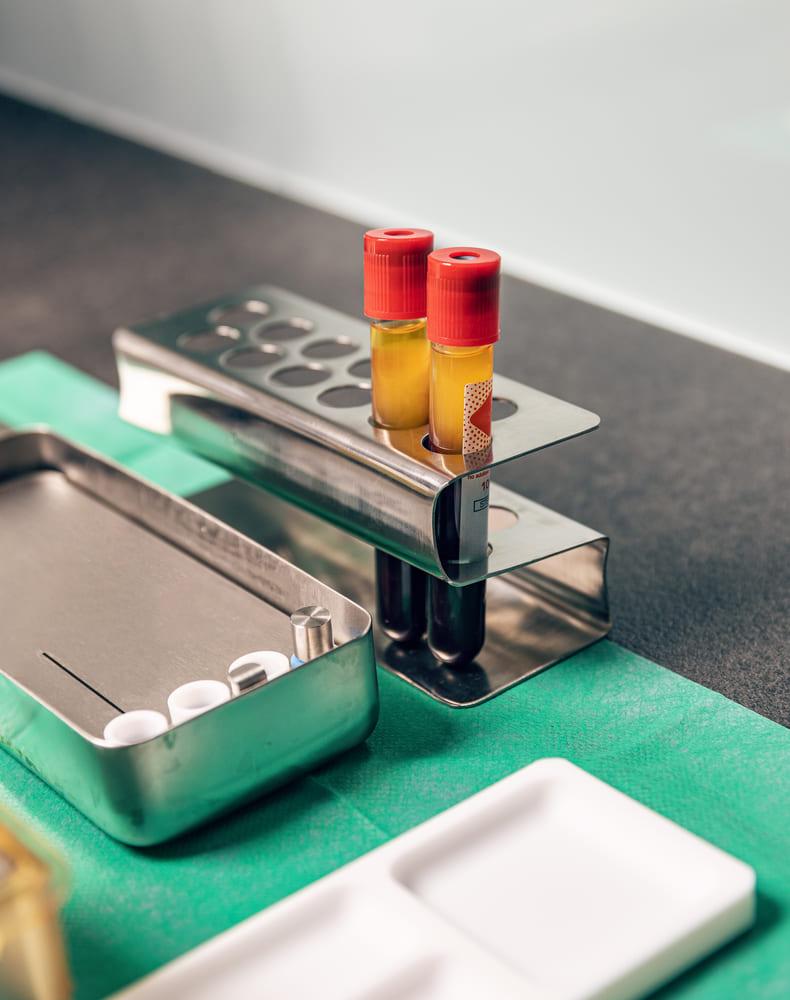
PRP (Platelet-Rich Plasma) injections
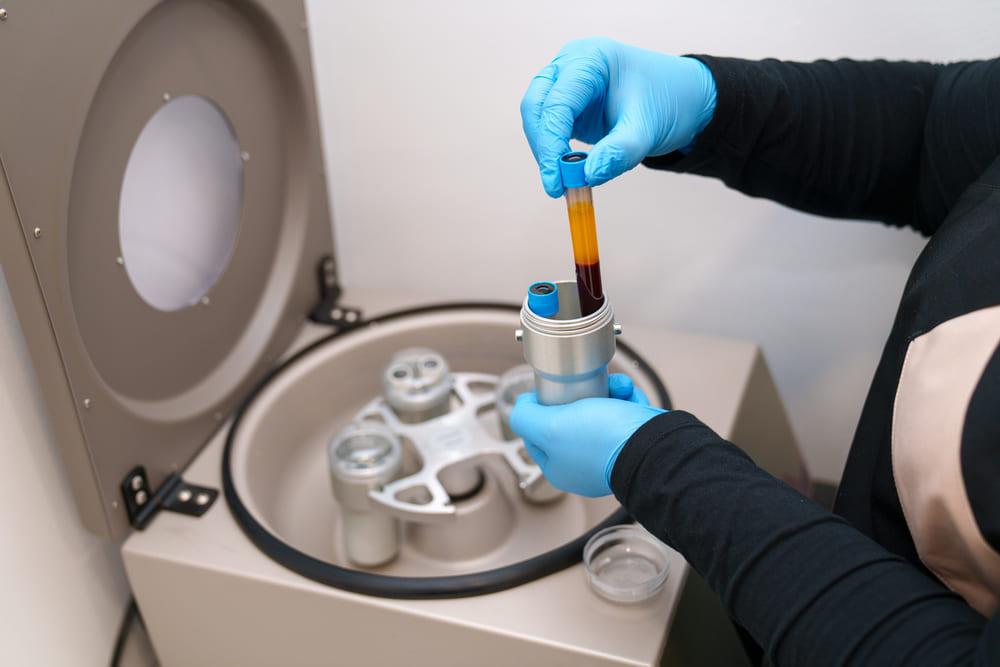
What is PRP ? PRP (Platelet-Rich Plasma) is a regenerative medicine technique that uses the patient’s own platelets to stimulate tissue repair and regeneration. The plasma is obtained after a simple blood draw , followed by centrifugation to concentrate the platelets, which are rich in growth factors . These biologically active factors promote microcirculation , wound healing , and cell regeneration . In urology , PRP is currently offered for two main indications:
- Erectile dysfunction , particularly of vascular origin or following pelvic surgery.
- Peyronie’s disease , to reduce fibrosis and improve penis elasticity.
Principle and Procedure of Treatment: PRP injections are performed during a consultation , under local anesthesia . After the plasma is prepared, small injections are administered directly into the corpora cavernosa (for erectile dysfunction) or into the fibrous plaque (for Peyronie’s disease). The session lasts approximately 30 minutes , without hospitalization, and the patient can resume their activities immediately. A protocol of 3 to 6 sessions , spaced a few weeks apart, is generally recommended depending on the individual case and clinical response.
Expertise
Understanding the PRP
Dr. Benarroche offers PRP injections after a rigorous clinical evaluation, as part of protocols aimed at improving tissue and vascular function.
 Expertise - Qu'est-ce que le PRP ?Dr Davy Benarroche
PRP and erectile dysfunction
PRP aims to restore natural erectile function by stimulating revascularization and regeneration of the cavernous tissues . Unlike drug treatments, it addresses the vascular or post-traumatic cause of the dysfunction. Clinical studies report improved erections in approximately 60% of treated patients , depending on the protocols used and the initial severity of the disorder. The best responses are observed in patients with mild to moderate vascular erectile dysfunction . Side effects are rare and minor (slight local tenderness or transient bruising). This approach can be offered as an alternative or complement to conventional treatments (drugs, intracavernosal injections, etc.).
Experience
Academic background
Dr. Benarroche offers care focused on men’s health , combining a medical and surgical approach, tailored to the needs of each patient.
 Dr Davy Benarroche - Parcours académiqueDr Davy Benarroche
PRP and Peyronie's disease
FAQ – Frequently Asked Questions
What is PRP and how does it work?
PRP (platelet-rich plasma) is prepared from your own blood, which is centrifuged to concentrate the platelets. When injected into the tissues, it releases growth factors that stimulate vascular and tissue regeneration.
What are the indications in urology?
PRP is used primarily in erectile dysfunction (P-Shot) and Peyronie’s disease, where it helps to soften fibrotic plaque and improve the quality of erections.
Is the session painful?
No. After application of an anesthetic cream, the injection is barely felt. The complete session (sampling, centrifugation, injection) lasts approximately 30 minutes, during a consultation, with immediate resumption of activities.
How many sessions are needed and what results can be expected?
The usual protocol involves 2 to 4 sessions spaced a few weeks apart. Since PRP is derived from your own blood, it is very well tolerated. Results appear gradually over 1 to 3 months and vary from patient to patient.
Is it painful?
No. The injections are performed under local anesthesia. Moderate discomfort may occur for 24–48 hours.
How many sessions are needed?
Generally, 3 to 6 sessions spaced 4 to 6 weeks apart are offered, followed by a clinical check-up.
Does PRP replace drug treatments?
No, it is a complementary or alternative treatment depending on the cause of the dysfunction. The initial urological assessment helps define the best strategy.
What are the risks?
Side effects are rare and mild: redness, bruising, or transient discomfort. No systemic side effects have been reported.
When will the results appear?
Generally after 2 to 3 sessions, with a progressive improvement in the quality of erections or the flexibility of the penis.
Dr Davy Benarroche's expertise
Chirurgien urologue - Andrologue

PRP injection: there are solutions.